Tuesday, June 9, 2015

Can't a Journalist Ask about Discrimination in Sport?

6/9/2015 -- after NGA v SWE 

First off, I love the Women's World Cup. Read the following knowing that I have enjoyed everything I've seen so far. 

Eric Wynalda made it clear that he is impressed with Nigeria's manager Edwin Okon. Their 3-3 draw was great fun to watch. 


There is a tendency to praise in the World Cup. The Super Falcons ran like crazy but I there was evidence of a lack of set piece defense training. Asisat Oshoala is so good-- I would need to see more games before I decide Okon is a good manager. Morale and belief can come from players as well. They would have won if they had not been unorganized in set pieces. 

An aside: after Germany's destruction of Ivory Coast (10-0), I and a lot of folks out there really wanted to see an African team put in a good performance. Cameroon's win over Ecuador (not as competitive a team as Sweden) was also exciting. Gaëlle Enganamouit is a star. 

Cameroon's Super-Personality

Here's where I get really concerned. When Okon stresses the team "prays all the time", I can't help but worry about past discrimination. I do not object to prayer on the pitch. It can be very dramatic and striking to see. 


This image is the kind of thing I want to see when it is player initiated. Of course, it would be annoying if the game has to be delayed like NFL games would pause for Tim Tebow. The manager though, cited it as an explanation for their good performance. 

So, here's the question that a journalist needs to ask. What if a player does not want to pray? Not everyone believes and many believers have different prayer styles. Nigeria is religiously diverse. How is that managed? Are there Christian and Muslim prayers? Or is the team all one or the other? 

Right now, Fox has shown us a team that prays together without any friction. It is irresponsible to present that without asking questions. 

Furthermore, Nigeria has had recent problems with explicit religion-based discrimination against lesbian players on the part of Edwin Okon's bosses. 

In 2013, Nigeria's Women's Football league president, Dilichukwu Onyedinma, called for all lesbians to be banned from football. She describes interfering with clubs to root it out. 

“Yeah, we don’t tolerate lesbianism and we always discuss it whenever we meet. We always warn clubs and club chairmen, to please tell their players to desist from it, because any player that we pick for national competitions, and we hear a little story that is involved in that, we disqualify the player.” 

Onyedimma cites the Bible in ways that should be familiar. (Does she cite the Bible when it comes to Muslim or non-religious players?) She should not be considered a side show. She serves on the Nigerian Football Federation's Executive Committee and, incredibly, is Deputy Chair of their Committee on Ethics and Fair Play. 

I have just linked to Jim Buzinski's article in OutSports and Mark Baber's blog Football Rights. But that is just it. Why isn't this part of the mainstream soccer press' discussion of preparation and squad selection? 

Football Rights cites one Nigerian women playing pro football in Sweden, Chichi Igbo, who is a lesbian and has not been called up. Are there others? I know one cannot prove that Igbo is being discriminated against. Asking Onyedinma revealed much. Ask Edwin Okon. Would he give up a Megan Rapinoe and a Abby Wambach? We hear a lot about "morale management". Why not discuss the effect of a sword hanging over the heads of all the players, any of whom can be accused at any moments. Onyedinma says she only needs "to hear a little story." 

The Nigerian FA's explicit policy includes opposition to discrimination based on religion and based on sexual orientation. Onyedinma doesn't seem to care. 

This is the sort of thing FIFA should work on. There is a right to play. But they are asleep at the switch. An explicit anti-lesbian activist sits on the Committee on Fair Play but FIFA is too busy. They are the ones who hired Edwin Okon. 

So, during the press conference, why not ask: 

"The head of Nigeria's women's league and co-chair of the NFF's ethics committee wants all lesbians removed from football. Do you support that?" If he says no. "How do you deal with a national leadership that is so hostile to some of your players?" 

"Not all Nigerians pray and not all Nigerians pray the same way. You've cited prayer as a secret to your good performance. How do you deal with religious diversity?" 

One of the problems with sports journalism is that it is repetitive. These questions can break it up a bit. 

When Fox covers Soccer, it should say something about the hardships faced by women who want to play. I've focused on Nigeria here but these problems pop up everywhere. Italy's women players cancelled its cup final to protest the head of Italy's amateur football association calling them "a bunch of lesbians". Homophobia extends to gay and straight alike one more time. There are fifteen players and two coaches who are out during this World Cup. What would they say to teams that have none? 

This is not only important. It is interesting. Why not interview Chichi Igbo? If Hope Solo's private life is news, why isn't this? Do players in pro leagues talk about this? Shouldn't FIFA let players who have faced discrimination switch to countries where they now live and get to play? 

Does Homophobia Distract Anyone?

I really liked the short bio of Megan Rapinoe Fox Soccer made, which mentioned her coming out as "gay" (her word). I wouldn't change that film. I liked it and want people to see it. She and Solo were the difference between the US and Australia during the opening game. It is nice to see her sporting personality linked to such an expressive spirit. 

Mike Huckabee- Do you really want to prevent more Megan Rapinoes? 
But you have to spend some time showing that being free isn't only about your courage or your attitude. Not that long ago, Rapinoe would have been excluded as a matter of policy. Not that long ago, she would have been accused of distracting the team or whatever when she came out. We benefit when we celebrate diversity and fairness. We are all freer and happier. 

In fact, a very large part of the story of women's soccer would need to acknowledge the role played by lesbian cultural institutions in the US and in Europe. Don't sweep it under the rug. Clubs like Hackney Women's Football Club moved mountains to create good spaces to play. Celebrate it. One reason Norway was so good in the early nineties was that they were drawing players from this culture. When the head of Italy's Lega Nazionale Dilettanti (great phrase) uses the word "lesbian" as an insult, one response is to just show most people don't think so anymore. 

This game is beautiful. It exerts power over the viewer. That power can either be mobilized for exclusion or can serve as an opportunity to generate spaces that are more just and more peaceful than the rest of the world. The game won't do good by accident. It won't do any good without asking questions about how players are treated. 

Tuesday, March 31, 2015

Football Action Network Manifesto

Highly recommended, this manifesto for a better game. David Goldblatt takes seriously the place that soccer has in British society. Here in the states, this manifesto should guide future decisions by the WPSL and MLS.

I will throw this in. If the game is beautiful, it needs to also be good.

http://www.theguardian.com/football/blog/2015/mar/28/football-action-network-manifesto-this-game-is-our-game-general-election-premier-league

Sign held up by Crystal Palace fans after Premier League TV deal is announced in 2015.


Thursday, January 8, 2015

Put Your Hands Together!

Two things I love: 

On the one hand there is:

 David Goldblatt's stories of the cultural and spectacle that comprises and surrounds soccer. 


On the other hand there is: 

The blog "Football is a Country" which looks at Africa, race, and soccer. 


Well put your hands together: 

"Football is a Country" reviews Goldblatt's book Futebol Nation: The Story of Brazil through Soccer


Football is a Country is part of a larger project called Africa is a Country. Great stuff. 


David Goldblatt has also just published The Game of Our Lives, a history and cultural account of English soccer. 

Goldblatt is also a frequent commentator on Dummy, the podcast put out by Howler Magazine.  I don't know how writers write so much. 


By the way, I have just gotten word that I have published a piece on soccer and creative fandom. I will say more when that get closer to public release. 


Saturday, November 8, 2014

Four: Germany Wins The World Cup-- What Does it Mean?


People say “It’s the USA versus Mexico tonight.” In every World Cup, England always end up playing a country that they once fought in a war or had colonized. That comes from identifying with a long history that includes a large empire. I suppose some match-ups are not as fraught. New Zealand versus Italy or Ivory Coast versus Japan come to mind. Some match-ups are exciting for strictly footballing reasons, like Germany versus Argentina. Germany's story of its self is very closely linked to the sport. 

     Let’s take West Germany’s 1954 World Cup victory in Berne. Called “Das Wunder von Bern” Germany now re-enters the world stage. There is a way to participate in the international community again. The defeat and corruption of the Nazis will only haunt the country so long. This final was the first time the German National Anthem had been played at an international event since World War Two.
 
1954 Germany in White and Hungary in Black.
Morlock scores for Germany. Source: Getty Images
   German characteristics were often cited in explaining the victory. Adidas had invented a new boot with screw-in studs so you could keep the same boot on in muddy weather. Teamwork, diligence, and technology will get Germany out of its troubles. Das Wunder von Bern is part of the story of the Wirtschaftswunder. The Cold War also comes into play as Germany beat a Hungarian team widely considered one of the most skillful ever.[1] A cold rain is sometimes still called “Fritz Walter weather” after the captain of this team. 
     There are hundreds of examples of soccer matches invested with narrative implications. Polish fans remember a match on July 3rd 1974 that they call “Der Wasserschlacht” the “Water Slaughter”.
A whole day of rain created conditions that were widely said to give Germans an advantage. Germany did win the match, knocking Poland out of the tournament. I was very struck when I found out that Polish television replayed this entire match right before showing a recent encounter between these two teams in the 2008 European Championship. How could anyone invest themselves in such grief? 


     France’s World Cup 1998 winning side is celebrated as a triumph for the multicultural vision of France. (The story of Zidane became the stuff of obsession because a multi-colored France won in France.) It would be hard now to win with a racist understanding of any national team. Jean-Marie Le Pen stated that he would
rather have a team composed of “actual” Frenchman. The team signed a statement that they would not play for France if Le Pen won the French presidential election. The team represents the country and its composition forces a debate. Debating the national team gets people talking to each other who otherwise do not meet.
     Similarly, many Americans have recently learned of the existence of Black Germans as the US national team has recruited among the children and grandchildren of Americans.
     
I was struck by an article Ogo Sylla on Howler magazine’s website that argues that the 2014 Men’s World Cup is the first German victory that “means nothing”.[1] Sylla calls this the "first apolitical victory in it's soccer history." 
It is hard to argue that this victory meant more than the one in 1954 but stories will be told. Right before the World Cup Final, David Goldblatt places the German team in the “real-world” context that informs the sporting narrative:
Germany, finally emerging as what it has been for decades, the pre-eminent European power, has a football team to match its ambitions and its character: brilliantly organised but instantly flexible, individually accomplished but telepathically networked, technically superior to the Brazilians in touch, positioning and anticipation. Yet they carry other German traits too: a collective solidarity that disdains the egotistical, and a realistic conservatism about an uncertain world, for no one feels victory is assured. (“The World Cup is Political Theater of the Highest Order” the Guardian 11 July 2014)

Ogo Sylla is arguing that this German victory is, unlike some earlier matches, neither changing the self-assessment Germany has or its international reputation. There is no Zero hour in the recent past nor is there a Cold War in the present. But the idea that Germany has it figured out in a world of chaos is not the worst message to put out. There is a reason Angela Merkel showed up for so many pictures with the team. 
     Sylla describes the narrative as wholly soccer-based. But look at his final two paragraphs. 
Following the country’s failure at the 2000 European Championships, Germany heavily overhauled its soccer infrastructure. The DFB integrated more immigrants into its academies — facilitated by the reform of the German nationality law in 1999 — to improve the selection pool, which opened the path to the likes of Lukas Podolski and Miroslav Klose (Polish descent), Mesut Özil and Sami Khedira (Turkish descent) and even Mario Gomez (Spanish descent), among others.  
Maybe this absence of any added significance in victory has helped Germany focus better on their objective: winning. At least, compared to Brazil, the difference was clear as day. Unlike the hosts who were all emotion, Germany had been all business. 
What is submitted as "all business" and "apolitical" is highly political. Germany is winning because it has become cosmopolitan. 
     Sylla is not one hundred per cent accurate, though international immigration is confusing. Germany would have issued passports (if not full citizenship) to all of these players. Klose and Poldoski were Aussiedler and had a right to citizenship based on German ancestry. Mesut Özil is a third-generation German and Khedira (of Tunisian descent) and Gomez have German parents. The path was not opened by new immigration laws. This team is marked by the Europeanization of Germany. Look at the picture with Merkel and our idea of what it means to be German is shown to have shifted. (This move is one of the reasons Germany has weathered a few economic storms it should be said.) 
     This raises the question of how important a World Cup should be. I have been arguing that creative fans should write the stories that work and that ought to be told. Goldblatt is an excellent example of this, though some of the debtor countries in Europe may not be as impressed with Germany's economic achievement. Sylla's tone reminds us that we should have an ironic stance towards all narratives that hold sport up next to the world. Once a result is used to explain the outer-soccer context, we should look back into the soccer context. After all, if Mario Götze had just hiccuped, we would have told a story of Argentina recovering from a currency crisis. If that didn't work, then we would have told a story of a very resolute team. Or we would have deified Messi. 
     I am ready to welcome these big stories if irony is brought to bear. However, the fact that FIFA denies glory to the women's game gives the ironist the upper hand.
FIFA spent more money on a movie United Passions about the history of its executives than it would cost to lay down sod for the upcoming Women's World Cup. I have not seen this movie but one can see where the glory-priority lies. Matches played on artificial turf have a lower-league feel just like the ding of an aluminum bat gives a baseball game a lower-league feel. FIFA says that Canada won the bid and they might use turf for men in the future. FIFA failed to get a good bid. They only got two and the other was from Zimbabwe. They could have said that and tried again. FIFA may well know that if Russia or Qatar insist on turf for every pitch, the tournament will be denounced. Instead of fibbing, FIFA could make it a priority to give the women's game some of this story-telling power. Make it look right. 


[1] Ogo Sylla, “For Germany, For Once, It Means Nothing: previous triumphs were fraught with political overtones but the 2014 champions will be remembered solely for their soccer” Howler at http://www.howlermagazine.com/germany-means-nothing/


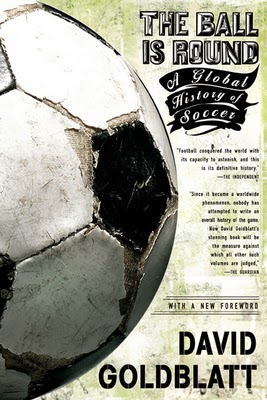
[1] See Deutsche Welle, “Mourning the Miracle of Berne”   http://www.dw.de/mourning-the-miracle-of-bern/a-948399-1. Like many people I also would refer to David Goldblatt’s The Ball is Round [ref and ppg.]. This title quotes Sepp Herberger, the manager of this German team. 

Friday, October 24, 2014

The Tail Wags the Dog... Again. This Time an Ethicist Falls to the College Sports Crazy Machine

The headline in the Chronicle of Higher Education:

The Ethicist Who Crossed the Line


Brad Wolverton reports that Jan Boxill, a philosopher at UNC-Chapel Hill, head of one of their Ethics Centers has been complicit in steering athletes into fake classes that included no attendance or evidence of learning or writing of any kind.

This really makes me sick.

I have a little bit to say about Jan Boxill. The Chronicle article, by the way, is deeply flawed. Click here to read the Guardian and to find links to the actual report.

Jan Boxill was an important source in philosophy and sport, in particular ethics and sport. I've benefited from her work. She also was apparently a fixture in UNC campus life. The school decided to pretend many, many, athletes who could not pass a class were students. She would have had to defy the school to reveal the truth. The administration could have caught this if they ever looked into it. Jan Boxill's work will now be harder to read.

As someone trying to read and write philosophy of sport, I can tell you that there already is a problem with it being taken seriously. This will not help.

We know that ad hominem arguments are invalid. We know that she may well have been correct while writing about ethics and sport while all wrong as an advisor. But actually, there may not need to be as strong a divide drawn between her theoretical work and her work subordinating education to athletics. In fact, a running theme in her work is an explanation of why sport fascinates. She considers playing to be a free, creative, act of the sort that the world of work fails to provide.
Sport, I maintain, fascinates for many reasons, including its beauty and its display of morally heroic virtues.  Human beings admire the beauty and grace in sport; they are moved by the discipline of the best athletes; and often it is the heroism and courage in sport that they applaud, not the violence which occasion the display of these virtues. (Jan Boxill, "Introduction: The Moral Significance of Sport"; in Sports Ethics: An Anthology; Jan Boxill, ed.; Malden, MA: Blackwell; 2003.) 
Boxill writes very well about why sport presents virtue and often presents a microcosm of the society that organizes sports. Boxill's description of the fascination the game poses for the player and the viewer cannot be trumped by her ethical lapse. Her descriptions help explain it. I often state that "it is the beauty that makes us insane" when it comes to sport.

I can't imagine anyone trusting UNC Chapel Hill if all they do is fire Jan Boxill and one other deceitful professor (who organized classes no one attended) and then say sorry. But these high-revenue programs steer the school. I couldn't imagine anyone going to Penn State after they merely lost a couple of coaches and their president. Penn State still has the football program that steered the whole school crazy. Penn State and UNC are not structurally different from all those other schools where the tail wags the dog.

from laxmagazine.com
An aside: Fandom entails an emotional connection. Who could go cheer for a team once used as a child rape magnet? That Nittany Lions logo was in the locker room. Being a fan there will require deflection and denial-- not good virtues for a school. This makes it harder for me to watch schools with the same structure play games. Some people aren't going but those who challenge the culture at Penn State-- which was cited as a problem in Louis Freeh's report-- are often threatened.


While the Penn State scandal, the rally to support football there, and the lack of consequences is on another level, the UNC fake credit scheme is outrageous. UNC conducted a massive scam. 3,000 students got college credit for a class they did not attend. Boxill was not their fake professor but she was advisor to many of them. She knew what was going on. She was earlier the elected Chair of Faculty and served as the director of the schools' Parr Center for Ethics. Her time as head of faculty has ended and she has, naturally, been replaced at the Parr Center. The press release has no explanation and is signed by a dean who still has some explaining to do.

Boxill may well have seen herself as helping students she liked. An e-mail of hers shows her lobbying for a "D" for a student who has finished playing and needs to graduate-- and who had plagiarized the paper. She liked student athletes and explains why in her work. This sort of things happens outside of sport as well. Of course, in helping students she liked, she harmed students who would have used their scholarships to, you know, learn things. She also harmed professors who want students to, you know, learn things.

I hate to be sarcastic here. I do not want to see Jan Boxill thrown under the bus. Her e-mail exchange was bad but that stuff happens now and then. We should note that many, many, on-line classes are open to similar abuse. Not all work is done by the student who gets the credit. How does the instructor know? This isn't treated as the obvious scandal.


I was reluctant to mention Jan Boxill's husband, Bernard Boxill, but his name will come up. I would doubly hate to see very good work on his part called into question. His book, Blacks and Social Justice was written in the eighties but still constitutes an excellent introduction to political philosophy and proof that it can be clarifying and relevant. I read it as a new grad student and it kept me going. Almost every anthology on race and philosophy has included a good essay from Bernard Boxill. While there is no reason to besmirch this work, which covers issues like economic distribution, the history of African-American political thought, international obligations, affirmative action and reparations, I worry that this will happen anyway.

And Jan Boxill's work still deserves a critical read. Just because she lost sight of priorities doesn't mean she can't help us see the motivation for putting up with such madness. Deans, the president, and the NCAA have a lot to answer for. Would they have found this fake class if they wanted to. Upton Sinclair once said "It is difficult to get a man to understand something, when his salary depends on his not understanding it."

Blaming the Ethics of Care

When I worry about Bernard Boxill and African-American Studies getting an unfair deal, I can only point to the treatment given the "ethics of care" which is cited as a potential source of Jan Boxill's loss of moral compass. The author Brad Wolverton cites Richard Southall who is a sports management professor who had written in her anthology. (No philosopher was contacted for this article.)

Southall says to Wolverton that Boxill argued that the ethics of care should be mentioned alongside other approaches in a book that she edited on sports and ethics. And then either Southall and Wolverton or just Wolverton speculate.

But the ethics of care should be featured in a book on sports ethics. It is an important debate in ethics. In fact, I have not seen Jan Boxill argue for the ethic of care, though there is much there that I have not read. (If anyone knows let me know.) The fact that she argue for its inclusion is no evidence that she believed in it or that it warped her.

The ethic of care arose in some feminist philosophical circles and argued that care can be as strong a source for ethics as justice. Many feminists were not on board. There was a very rich debate about the place of care in ethics and its potential to fill in where justice-based ethics were too abstract or otherwise skewed.
If only there were sources on the ethics
of care...

If you blame something, you ought to describe it. Here is the ethics of care according to a piece in the Chronicle of Higher Education:
"In a nutshell, Mr. Southall said, the ethics of care puts the needs of an individual foremost, looking out for what’s in his or her best interests."
No it doesn't. In fact, I would not be surprised if Mr. Southall did not say this and Brad Wolverton just couldn't follow. If Wolverton knew anything about philosophy, he would not have considered this quote evidence. The ethics of care does not entail exploiting people on behalf of those you care about. Sure, there are "duties of care" that family members have towards each other, teachers have for students, and advisors would have for advisees. But care does not trump all fairness. If your interpretation of something is crazy town, you ought to re-investigate.

A concept rooted in feminism is  given a skewed description (again) and then it is blamed for corruption. To be more accurate-- it is a possible source of corruption. Is it? Philosophy and feminism are often interpreted as if its adherents were weak or nonsensical. Look at that quote. Would you attribute strong thinking to someone who argued that care could justify deceit and a general mocking of education. Did I mention no philosophers were contacted for this article? The Chronicle should apologize.

Is Caring for Athletes Even Remotely the Problem?

Caring about sports might cloud your judgment. Caring for students wouldn't lead to the world of big time college sports. These students practice for hours and often aren't given classes they need because everyone is pretending they are qualified to attend a college. If the SEC and other big schools weren't bringing them in, the very talented could prove their athletic skills while acquiring skills in reading in writing at a Community College or a minor league team with a literacy program. Caring for sport is not the same as caring for students.

There is a reason the school puts an adjunct in charge and not someone with the security that tenure would provide. Tenure is not just an award for academic labor. It holds up a light to shady corners. We should remember John Dewey's arguments when the AAUP campaigned to formalize tenure in the early 20th century. Dewey cared more about promoting public conversation that private perks for professors.

That the school used an Afro-Am department this way is extra sickening. Most Afro-Am courses I know about are too rigorous for most Freshman, it should be said here and will have to be said again. UNC allowed a scam artist to become chair of the African-American studies department. Other Black studies programs already face problems being taken seriously. African-American studies grads at UNC should call a lawyer.

The small uptake: Why on God's green earth would a college be able to keep a scholarship athletics program after this? Suspend it. "Why punish all the student athletes?" UNC should be required to keep funding them at UNC or wherever they transfer. That would be called an adequate punishment. Suppose I were to say "Such a scholarship would give them more time to study." You may well have thought "They don't want that." That perception is poisonous to a school. Actually, I can list quite a few athletes who clearly benefited from their education. This is not a lost cause. Schools can just learn to live without players who can't attend real classes or write their own papers.

This ad popped up in a search. You can love a
game and still tell the truth about it.

Some more objections: "You can't suspend the football program. They want to be athletes at UNC." I bet they do. They can't have it at the expense of schooling. "Students demand athletics and will transfer." UNC ought to be punished. If a serious review of athletic practices were to happen, these students could wander like Cain. Intramural or non-scholarship athletics wouldn't be banned. I know its not the same but you cannot have the same after all this mess.

3,000 people in a fake class. I have students who hear this exists (and hear it defended by sports commentators) and it poisons them. Students think they are suckers for not cheating. They are outraged when I don't let them do it over. Don't let UNC do it over.

The OSU marching band forms the eye of Sauron
The big uptake: All schools with big revenue programs need to acknowledge that the pressure has gotten poisonous. Phase out this imbalance in power. The NCAA lists how many student athletes there are in an effort to argue that these incidences are rare. They are not that rare. There have been well-documented rapes. There have been riots after games. Vulnerable adjunct professors are pressured and fan professors are found in order to dig up favors and fake credits. I don't know exactly how but phase this out. Schools are playing with fire when it comes to the programs. The desires of alumni and students and administrators are distorting judgments.

The Pumas in Mexican Soccer bear the name
of the Autonomous National University of
Mexico and they play near campus. Fans tend
to be alumni or students. But the players are
pros and not required to be students and no one
at the school has to pretend anything.

If the Cardinals can represent "Saint Louis"
with no residency requirement for players,
why can't the "Tarheels" represent the
UNC with no pretend academic requirements?
One possible answer: License out the name of the university to pro teams. The SEC could just stop pretending they are looking for students. (As part of the deal, give the players tuition when they are finished playing ball.) Schools would probably raise more money this way. Another possibility: pro leagues could start a minor league as an option for athletes who don't want to be in or can't handle college. Or both. There may be other fixes. Just quit pretending this isn't a nightmare.

Most objections just assume this cannot change. But it can. There are other games to watch and people will watch them if these disasters keep happening.

I've had a few friends with kids looking at colleges. I don't have a lot of particular college advice. Personal preferences matter. Big school/ small school. Big city/ small town. Whatever floats the kid's boat. But stay away from all schools with big revenue sports programs.

I've liked every coach I've met who works in a school where the programs make more sense. No scholarships but you lose your place on the team if you can't get decent grades. I put it in my syllabus that I will contact the coach if a student tells me that the sport has made them too busy to finish an assignment. Coaches promote attendance. This helps me teach.

Not one European college president or admin has ever had to deal with an athletics scandal. Think how much head space and time that leaves for school. You know, for learning things.

Sunday, July 13, 2014

Ghost Robot and 8x8 Magazine reproduce three great moments in the 2014 World Cup. 

#1 is unadorned.

#2 and #3 are little masterpieces.

The World Cup has slowed down my writing. More is to come.

Saturday, June 28, 2014

Soccer as Dialogue

Jennifer Doyle shows how its done. She lays out a great virtue in team USA. 

http://thesportspectacle.com/2014/06/23/art-of-conversation/